


Family gold & remodelling at Utopian Creations
Bring your gold.
Keep the story.
Most couples who come to us are carrying something (a parent’s ring, a grandmother’s chain, gold that has been in the family for years) and want it made into the rings they will actually wear. Some are remodelling a single piece they already own. Either way, we carry the part that matters into something new. Here is how it works, what it does to your budget, and where we will be straight with you about what we can and cannot reuse.
The idea
Old gold is really two things.
There is the story (the metal, the stones, the people it came from, the days it marked). And there is the shape (whatever it happens to be right now: a ring, a chain, a box of odd pieces).
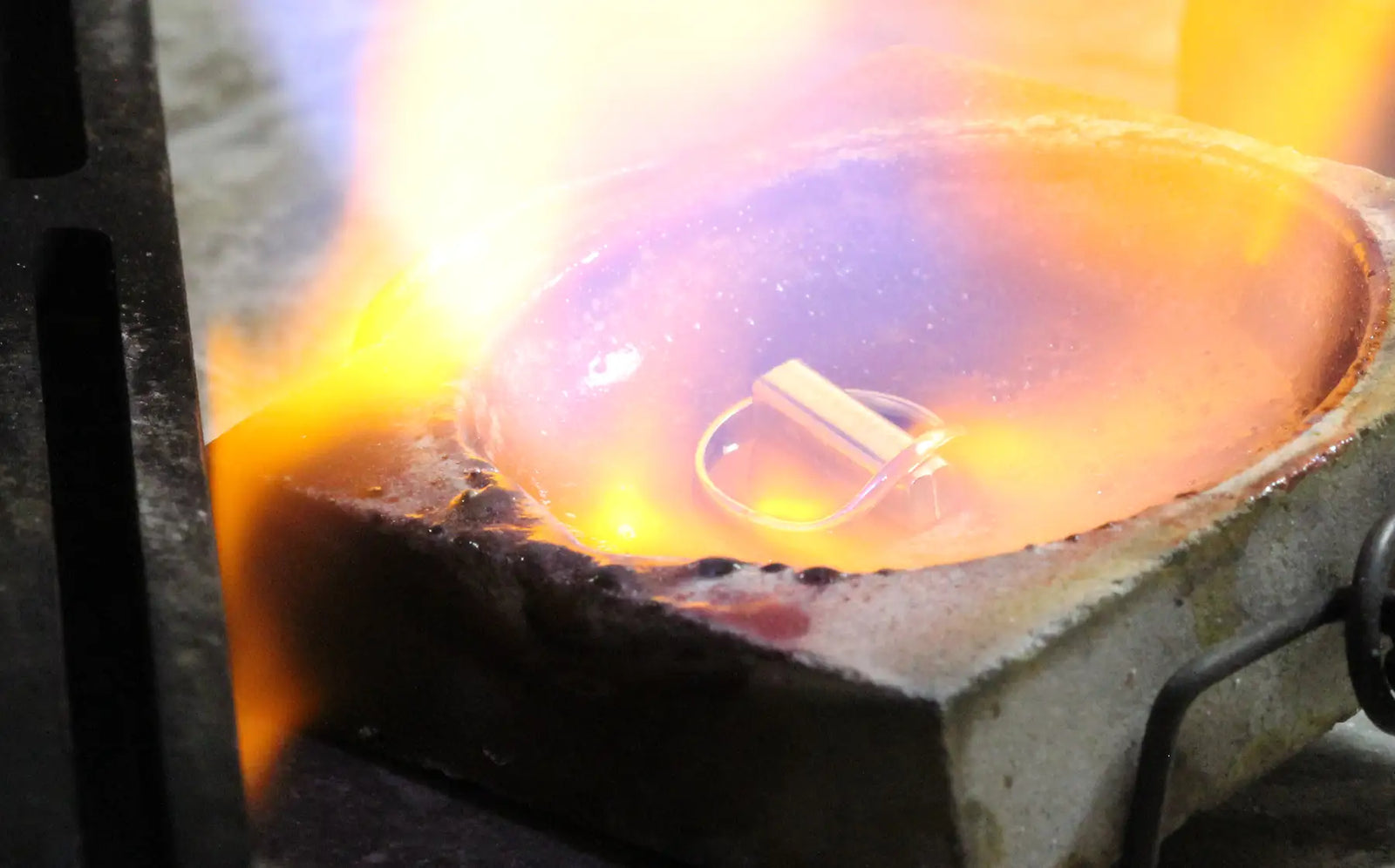
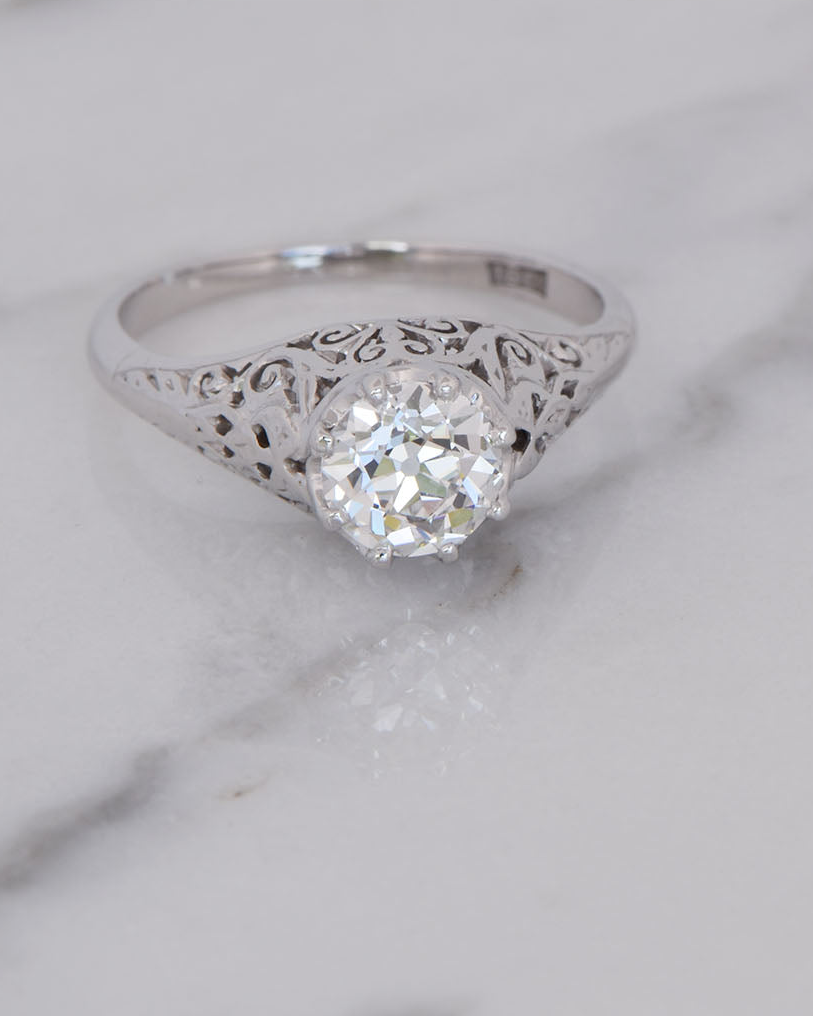
The story is the part you want to keep. The shape is the part that has had its day. What we do is hold onto one and remake the other: melting family gold into a new engagement or wedding ring, or reworking a single piece you already own into something you will wear. Sometimes a small change. Sometimes starting from raw metal.
The story
The gold, the stones, the meaning. The reason you cannot just sell it and move on.
The shape
Whatever form it is in now, remade into the rings you will actually wear.
Why people do it
The reasons are rarely about the jewellery.
Most people do not come to us wanting a new ring for its own sake. They come because of what their gold means, and who it came from.
- 01Wedding and engagement rings from family gold.The most common reason of all: a parent’s or grandparent’s gold, made into the rings you will wear for your own marriage. Their gold, carried into your start.
- 02Gold from more than one person, in one ring.Metal and stones from both sides of a family, or from two people who mattered, brought together into a single piece.
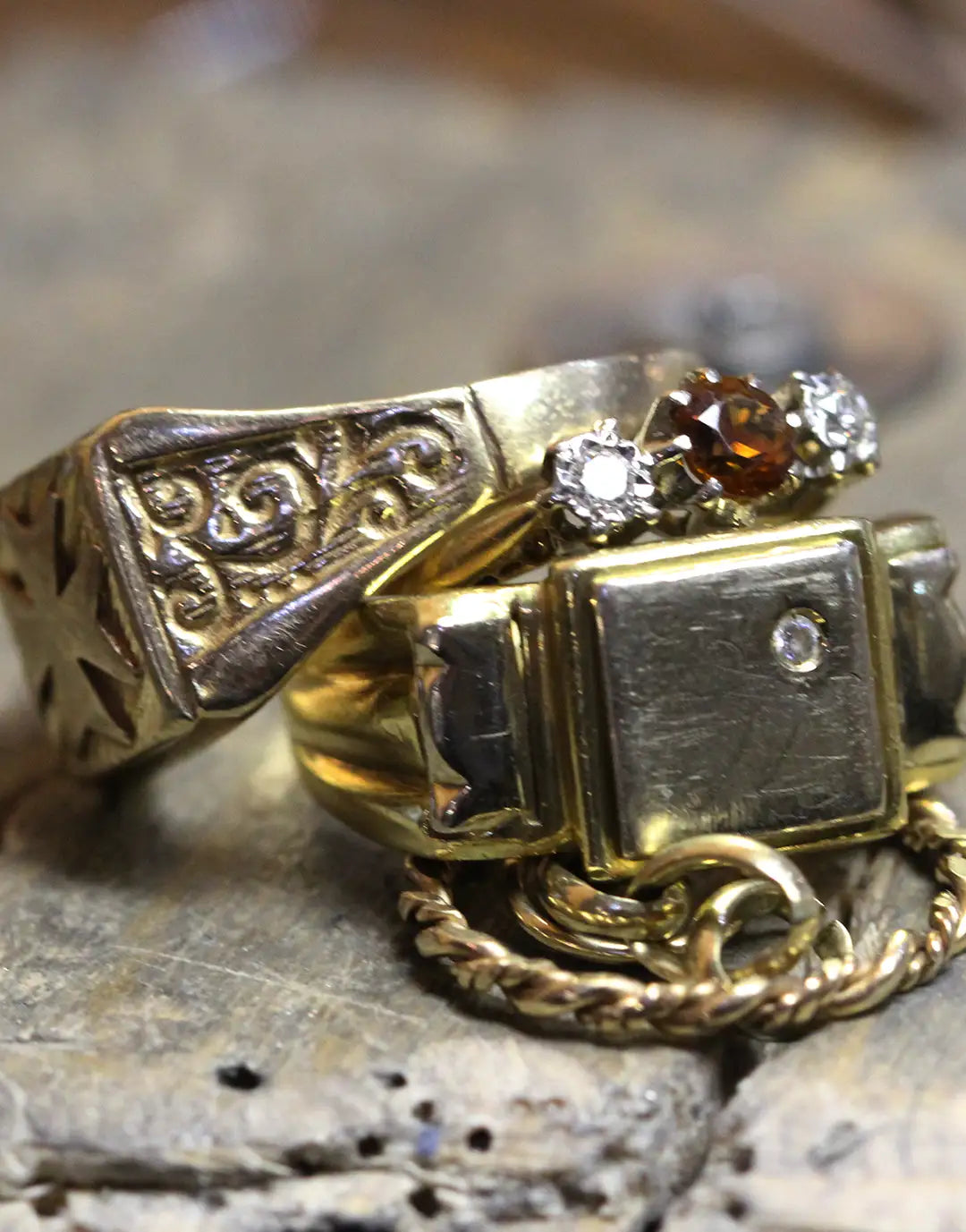
- 03An inherited piece you will never wear.A ring that is not your style, but you cannot bring yourself to sell. The gold and stones become something that is finally yours.
- 04A good stone in a tired setting.The diamond is still beautiful. The claws are worn and the design belongs to another decade.
- 05A chapter that is closed.A ring tied to a marriage that ended, turned into something with no weight attached.
What it means for the planet
The honest environmental version.
You will see other jewellers put big numbers on this: “90% less carbon,” that sort of thing. We will not, because the honest figures behind those claims are genuinely disputed, and we would rather tell you exactly what does and does not happen to your materials.
The gold and stones you already own do not need to be mined again. They are already in your hand.
Reusing your family’s gold is usually the whole point, and where it is sound, that is exactly what we do. Nothing new is mined for it. The parts that cannot safely go into the piece are refined and credited rather than discarded, so the metal stays in use either way. The gold we work with is refined by an LBMA-accredited, RJC-certified refiner, and every year we plant around 240 trees through One Tree Planted Australia.
What it means for your budget
Where the money actually goes.
In most fine jewellery, the stone is the expensive part, often the bulk of what you would pay for a new piece. When you already own the stone, you are not paying for it twice. That means your budget can go further into the design, or you simply spend less.
Old gold has worth too. Sold outright, gold rarely returns what you would hope: it is alloyed, and there are margins at every step. Credited toward a piece we are making for you, it usually goes further.
What this is not: automatically cheaper than buying off the shelf. There is design, there is bench time, and there is often new metal or extra stones to source. Sometimes it lands close to the cost of new. The difference is that it is yours, made from what you already had. You will have a clear written quote before any work begins, so there are no surprises.
The straight version
What is harder about it.
Most pages stop at the lovely bits. This is the part we think matters more, because working with your own gold has real trade-offs, and you deserve to know them before you start, not after.
-
The original is gone.
Once gold is melted down or a piece is taken apart, there is no putting it back. If it is a piece with a form you love, and any part of you wants to keep it exactly as it is, sit with that before you decide. Sometimes the right answer is to leave it as it was handed down and make something new alongside it instead.
-
Not every stone survives the bench.
Some stones are fragile (emeralds and opals especially) and older stones may already carry chips or hairline fractures from a lifetime of wear. Removing and resetting them carries a real risk of damage. We assess every stone first and tell you honestly what that risk is before we touch it. Now and then the safest choice is to keep a stone in its original setting and build around it.
-
Reusing gold is a skill: not everything can go in the melt.
Carrying your gold into the new piece is usually exactly what we do. But it has to be done properly, or you end up with a ring that cracks. Solder from old repairs is cut out first. Different purities are adjusted so the metal ends up sound and consistent: a 22k chain alloyed down to sit with an 18k ring, say. Solid white gold melted in with yellow spoils the colour, so it is cut off and set aside. And anything rhodium-plated we will normally refine rather than reuse: even a trace of rhodium in the melt can cause cracking, and that is not a risk worth taking with your ring. Whatever cannot go into the piece is not wasted: we keep every offcut together, and you decide whether to keep it or trade it in against the cost. Nothing disappears without you knowing.
-
It takes longer than buying something ready-made.
There is an assessment stage, a design stage, your sign-off, and then the making, and sometimes we need to source an extra stone or more metal along the way. Expect it to take longer than picking a finished piece off the shelf: as a rough guide, six to ten weeks from the day you approve the design, depending on the piece.
-
Matching old and new takes an eye.
New gold beside old, one era’s stones in a modern setting: making that feel intentional rather than mismatched is a genuine design skill. It is the part we spend the most care on, and the part that separates a considered piece from a compromise.
How it works
From your drawer to your hand.
We assess.
Bring the gold, the pieces, and the story behind them. We look closely at the stones and the metal, test what you have, and are honest about what can and cannot carry over.
We design.
We work up a design around your own materials. In the Design Room you can see your ring visualised before we make it, and refine it until it is right. Your design stays yours, start to finish.
You approve.
Nothing is melted, taken apart, refined or set until you have signed off on both the design and a clear quote. No step is a surprise.
We make it.
Your piece is designed and hand-finished in our Adelaide studio, then it is back with you, something you will want to wear every day.
Is it right for you?
When it is a good idea, and when it is not.
- –You have family gold you want made into your wedding or engagement rings.
- –You love a stone but not the setting it is in.
- –You want to bring gold or stones from more than one person into a single ring.
- –A piece marks a chapter you have moved on from.
- –You will genuinely wear what we make.
- –The original design is the whole point: the meaning is in how it looks, not just the materials.
- –The piece is costume or low-value, where remaking costs more than it is worth.
- –You are not sure you are ready to let the original go.
- –A stone is too fragile to move safely (we will tell you if it is).
There is no pressure either way. If it is not right for your piece, we will say so.
The first step
Start with a conversation.
Bring the gold and the story behind it. We will tell you honestly what is possible, and what is not. No obligation, just a look at what your jewellery could become.