


The World of Natural Coloured Gemstones
Every coloured stone carries a story older than human history. At Utopian Creations, we work with the finest sapphires, rubies, emeralds, aquamarines, tourmalines, morganites, topaz, and opals — selecting each one for colour, character, and the life it will carry forward in your piece.

The right stone is not simply found — it is recognised. We have spent twenty years learning how to look.
What Makes a Great Gemstone
A great gemstone is not simply one that looks beautiful in a photograph. It is one that holds its beauty across a lifetime of wear, carries an honest story, and speaks to the person who will live with it every day.
The criteria that matter in a diamond — perfect clarity, ideal cut, precise colour grading — are not the same criteria that define excellence in a coloured stone. Coloured gemstones are judged first by colour: its tone, its saturation, its life in different light. Then by character: the way inclusions might create a garden inside an emerald, or a silk haze in a sapphire that diffuses light into something luminous. Cut matters, but it serves colour rather than leading it. Clarity is a consideration, but it is understood in context.
We do not select stones from catalogues. We choose them the same way we would choose anything meant to last — slowly, in good light, with honesty.
At Utopian Creations, every gemstone we work with has been personally assessed for colour, optical quality, and suitability for the piece it will become part of. We work with a small group of trusted suppliers who share our values around sourcing transparency, and we source directly from Australian fields wherever the stone type allows.
We also believe that treatment disclosure is not a red flag — it is simply honest commerce. Most coloured gemstones on the market have undergone some form of heat treatment or enhancement. What matters is that we tell you exactly what has and has not been done to every stone we use, so you can make an informed decision.

The Three Things We Look For
Colour, life, and personality
Colour is the primary quality of any coloured gemstone, but great colour is not simply vivid colour. We look for stones that respond to light — that shift across daylight and candlelight, that have depth and dimension rather than flat uniformity. The inclusions, the cut, and the optical personality of the stone all contribute to what we call its character.
Honest provenance, fully disclosed
We will tell you exactly what has been done to any stone we sell — what treatments it has undergone, where it was sourced, and what certification accompanies it. The gemstone trade has a complicated history with disclosure. We believe transparency is not merely best practice; it is the foundation of the trust that makes custom jewellery meaningful.
Where a stone comes from shapes what it is
Origin is not just a marketing word. A Queensland sapphire carries a different colour signature from a Kashmir stone. An Australian opal has a different structural character from an Ethiopian one. We work closely with Australian sources wherever possible — not because Australian is automatically better, but because proximity allows us to know and stand behind every stone we source.
The Stones We Work With
We work with eight core gemstone families and a curated selection of rare and unusual stones. Each one has its own character, its own demands, and its own rewards.

Sapphire
Blue · Teal · Parti · Pink · Yellow · White · Padparadscha
Sapphire is the most versatile coloured stone for fine jewellery and our most requested material. As corundum, it sits at Mohs 9 — second only to diamond in hardness — making it an exceptional choice for rings worn every day. It occurs in almost every colour except red, and Australia produces some of the most individual stones in the world: parti sapphires that shift from teal to gold, deep Queensland blues, and delicate pale pinks found nowhere else.
Explore sapphires
Ruby
Pinkish red · Vivid red · Deep crimson
Ruby is the red variety of corundum, coloured by chromium, and it shares sapphire's hardness of Mohs 9. It is one of the most durable choices for fine jewellery and one of the most emotionally charged. Fine ruby is rarer and more expensive than most people expect — the deep, vivid reds that glow from within command extraordinary prices. We source rubies with that same directness and honestly disclose all treatments.
Explore rubies
Emerald
Vivid green · Bluish green · Deep forest green
Emerald is the green variety of beryl and one of the most storied gems in history. It is loved not for icy perfection but for colour, soul, and internal character — the inclusions that form inside an emerald are so distinctive that gemologists call them a jardin, a garden. Nearly all emeralds have inclusions, and the finest ones are valued for richness and life rather than clarity alone. We set emeralds thoughtfully, choosing designs that protect their slightly softer nature.
Explore emeralds
Aquamarine
Pale blue · Greenish blue · Deep sea blue
Aquamarine is the blue to greenish-blue variety of beryl, prized for its clarity, clean colour, and calm luminosity. Where sapphire commands, aquamarine whispers. It works beautifully in larger stones and cuts that emphasise its transparency — elongated shapes, emerald cuts, cushions. It is an excellent choice for someone who wants a refined, cool-toned gemstone with excellent natural clarity.
Explore aquamarine
Tourmaline
Teal · Mint · Bi-colour · Watermelon · Pink · Green · Chrome
Tourmaline is the most colour-diverse mineral family we work with. It occurs in virtually every colour and combination — from saturated Paraiba-type teals to soft mints, earthy greens, vivid pinks, and the iconic watermelon stones that pass from green to pink through a single crystal. It is ideal for people who want individuality over convention. Tourmaline at Mohs 7 to 7.5 is well-suited to rings with protective settings.
Explore tourmaline
Morganite
Blush pink · Peach · Salmon · Rose
Morganite is the pink to orange-pink variety of beryl, and it has a warmth that pairs beautifully with rose and yellow gold. It is a stone of soft colour and flattering light rather than drama. Most morganite has very good clarity and is available in larger sizes, which makes it an appealing choice for statement pieces. We recommend protective setting styles for everyday rings, and we are always honest about the care its pale saturation requires over time.
Explore morganite
Topaz
Blue · Swiss blue · London blue · Imperial · Precious
Topaz is a hard and brilliant gemstone — Mohs 8 — that comes in a wide range of colours. Blue topaz, enhanced through heat and irradiation, offers a clean, affordable alternative to aquamarine. Imperial and precious topaz, in warm golden and peachy tones, is the rarest and most valuable form. The main consideration with topaz is its perfect cleavage: it can split cleanly if struck at the wrong angle, so setting design matters more than hardness numbers alone.
Explore topaz
Opal
Black · Crystal · Boulder · White · Lightning Ridge · Coober Pedy
Australian opal is unlike any other gemstone. Its play-of-colour — the rolling fire that moves across its surface — comes from light diffracting through microscopic silica spheres arranged in orderly patterns. No two opals are alike. Australia supplies roughly 95 per cent of the world's precious opal, and we source primarily from Lightning Ridge and Coober Pedy. Opal at Mohs 5 to 6.5 is softer than most gemstones and asks for thoughtful wear, but for those who understand its nature, it is one of the most extraordinary things in jewellery.
Explore opal
Rare & Unusual Stones
Every colour · Curated on request
Beyond our core eight families, we curate exceptional stones for collectors and those who want something truly singular. Alexandrite that changes from green to red under different light. Demantoid garnet with its fire that rivals diamond. Colour-change garnets, fine spinels in every hue, chrome tourmaline of extraordinary intensity. If you have seen a stone that captivated you and cannot identify it, bring it to us. Finding rare gems is one of the most rewarding parts of what we do.
Enquire about rare stonesSapphires — The Stone That Defines Us
Sapphire is the stone we return to most often and know most deeply. It is the foundation of our coloured stone work, and Australia gives us access to some of the most individual sapphires in the world.
Hardness
Mohs 9 — a lifetime stone
Sapphire is corundum, the same mineral family as ruby, and it sits at Mohs 9 on the hardness scale — second only to diamond. This makes it exceptionally resistant to scratching and one of the very best choices for rings worn every day. It does not require the protective settings that softer stones need, which opens up a much wider range of design possibilities.
Colour Range
Every colour but red
Sapphire occurs in blue, violet, green, yellow, orange, pink, purple, and near-colourless — and in combinations of all of these. The red variety is called ruby. Particular colours carry special names: the pinkish-orange padparadscha, for example, is among the rarest and most sought-after of all sapphires. Australian parti sapphires, which shift between two or three colours within a single stone, are a category entirely our own.
Australian Sapphires
Parti, teal, and the colours only Australia makes
Australia — particularly Queensland and New South Wales — produces sapphires with colour characteristics found nowhere else. Parti sapphires contain multiple colour zones that shift from teal to gold, green to blue, or yellow to olive depending on the angle and the light. They are formed differently from most sapphires and their colour is entirely natural — no heat, no treatment. We source these directly and consider them among the most individual stones in the world.
Treatments
Heat, and when we choose to avoid it
The majority of blue sapphires on the market have been heat-treated to improve colour and clarity. This is an accepted, stable, and industry-standard process that does not affect a stone's durability. We always disclose treatment status on every stone. We also specifically source unheated sapphires for clients who want them — unheated stones of fine quality command a significant premium and, where GIA or Gübelin certificates confirm their status, represent genuine rarity.
Origins
Kashmir, Ceylon, Burma — and why origin matters
Origin affects both value and character. Kashmir sapphires — no longer mined in any meaningful quantity — are the benchmark for velvety, cornflower blue colour. Ceylon (Sri Lankan) sapphires are known for their brightness and clean colour. Burmese stones tend toward deeper, more inky blues. But origin should not override visual quality. A fine Australian teal with an honest history is more meaningful to us than a mediocre Kashmir stone with a prestigious provenance certificate.
Design
Designing around the stone, not around the setting
Sapphire's hardness means we can build rings that let the stone carry more visual weight with less metal around it. Open, minimal settings — fine prongs, knife-edge bands, flush mounts — all work well because the stone can handle them. We design every sapphire ring beginning with the stone's shape, colour, and proportions, then build outward from there. The setting serves the stone.
How we read it
Coloured gemstones have no universal clarity standard — every laboratory and grading house describes a stone a little differently. We keep it simple and honest with a five-step scale, from the cleanest stones through to the most heavily included.

Eye Clean
No inclusions visible to the naked eye.
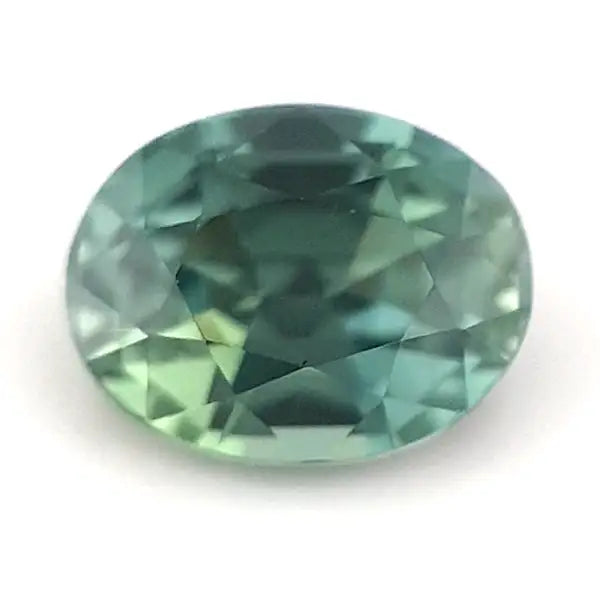
VS (Very Slightly Included)
A few very small inclusions, such as tiny crystals or light silk.
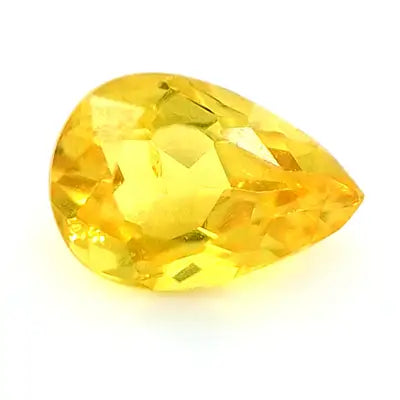
SI (Slightly Included)
Inclusions that can be seen but don't affect the look or sparkle of the gemstone.

I (Included)
Significant inclusions that are easily seen.

Opaque
No light passes through the gemstone.
Inclusions are not good or bad in themselves. It depends on the gemstone and personal taste: some add character, while others may detract from a stone's beauty. Inclusions are used by gemologists to help determine whether a gemstone is natural and to identify treatments such as heat. Their importance in the identification of coloured gemstones is paramount, and we see them as friends, not enemies. Our labels are only ever meant as a guide. Use them alongside the high-quality images and videos we provide, especially the natural-light images, to decide whether a stone is right for you. We cannot stress enough how important it is to view coloured gemstones in person.
Where Our Stones Come From
Every gemstone we use has a traceable path to us. We work with a small group of suppliers whose sourcing practices we have assessed firsthand, and we source directly from Australian fields wherever the stone type allows.

Honest stones for pieces that last a lifetime
The gemstone supply chain is long and often opaque. Our response to that is not to pretend it is simple, but to be as direct and transparent as possible at every point we control. We know our suppliers personally. We ask questions about mining conditions, fair compensation, and environmental practice. We disclose every treatment. When we cannot verify a claim, we do not make it.
Australian Sapphires
Queensland and NSW direct sourcing
Australian Opals
Lightning Ridge and Coober Pedy
Treatment Disclosure
Full disclosure on every stone, always
Certifications
GIA, Gübelin available on request
We will never sell a stone we cannot stand behind. If we cannot answer your provenance question honestly, we will tell you that — and help you find a stone we can.
Gemstones in Engagement Rings
Not every beautiful gemstone is equally suited to a ring worn every day. Understanding hardness, toughness, and setting requirements helps you make the right choice for your life — not just for the photograph.
Sapphire · Ruby
Sapphire and ruby are corundum — Mohs 9 — and the benchmark for coloured stones in daily-wear rings. They resist scratching from almost everything encountered in ordinary life, require no special setting protection, and maintain their surface finish for decades with routine care. These are our first recommendation for anyone planning a ring worn continuously.
Topaz · Aquamarine · Emerald · Morganite
Beryl family stones and topaz are hard enough for engagement rings when set with care. Protective bezels, lower profiles, and flush side stones all reduce the risk of impact damage. Topaz has perfect cleavage requiring particular attention to setting geometry. Emerald is further complicated by its inclusions. These stones are excellent choices for the right person — someone who understands and accepts their slightly higher care requirements.
Tourmaline · Spinel · Garnet
Tourmaline, spinel, and most garnets are good choices for engagement rings provided the setting is designed with protection in mind. Closed bezels, partial bezels, and settings that keep the stone low to the band all help. These stones will scratch more readily than sapphire over years of daily wear, but with modest care they are entirely practical — and tourmaline in particular offers colour ranges that no other stone can match.
Opal · Moonstone · Apatite
Softer stones — especially opal — are not the first choice for a ring worn every day without thought. They will scratch, they are sensitive to impact, and opal is also sensitive to extreme dryness and chemicals. But for someone who understands the stone and will care for it properly — removing it before activity, storing it away from other jewellery — opal in an engagement ring is not impossible. It asks for a particular kind of relationship with the piece you wear.
Designer Note
Hardness is only one dimension of wearability. Setting design, stone proportion, the wearer's lifestyle, and the care they are willing to give all matter just as much. We discuss all of these in our consultation — the right stone is always the one that suits the life it will be part of.
Read our engagement ring guideTwenty Years, One Philosophy
We have been making custom jewellery in Adelaide since 2005. Almost everything in-store is designed in-house, all made in Australia. Not imported, not compromised.

A working studio, not just a showroom
Utopian Creations is a design-led studio first, a shop second. When you commission a piece with us, it begins on our bench — designed by a team that has been doing this work for over two decades. Most of our jewellery is 3D printed and cast in Sydney, then hand-finished here in our workshop, where the detail and character of each piece take shape. We also keep traditional jewellery manufacture alive, hand-making pieces from raw metal and remodelling heirlooms in our workshop, the way it has always been done. Our gemmological training, our supplier relationships, our design process, and our after-sales care are all part of the same studio, settled for over ten years in Adelaide's East End, a quarter known for its laneways, independent fashion, restaurants and bars.
Established
Adelaide, South Australia, 2005
Gemology
GIA-trained gemological assessment
Production
All work designed in-house, every piece passes through our workshop
Sourcing
Direct Australian stone sourcing
Design Before You Visit
Not sure how to explain what you want? The Design Room lets you visualise ring designs interactively before your consultation — so you arrive with ideas already formed.
Try the Design RoomQuestions Worth Asking
We would always rather you ask than wonder. Here are the questions we are most often asked about coloured gemstones — answered honestly.
What is the Mohs scale and why does it matter for jewellery?
The Mohs scale is a measure of a mineral's resistance to scratching, running from 1 (talc) to 10 (diamond). For jewellery purposes, it gives a rough guide to how well a stone will hold its surface finish over years of wear. Sapphire and ruby sit at Mohs 9, which means almost nothing in everyday life will scratch them. Opal sits at 5 to 6.5, which means sand, concrete, and other hard surfaces can mark it. Hardness is not the only measure of durability — toughness (resistance to breaking and chipping) matters too, which is why we also discuss cleavage, brittleness, and setting design when helping you choose a stone for an everyday ring.
Which gemstone is the best choice for an engagement ring?
Sapphire is our most recommended coloured stone for engagement rings, primarily because of its Mohs 9 hardness, its extraordinary colour range, and the fact that Australian parti and teal sapphires offer something genuinely original. Ruby shares sapphire's hardness and is an equally excellent choice. Beyond corundum, topaz, aquamarine, emerald, and morganite are all possible with the right setting design and an honest conversation about care. The best choice depends on your lifestyle, aesthetic preferences, and how you plan to care for the ring — which is exactly what our consultation is for.
Do all emeralds have inclusions?
Almost all of them, yes. Inclusions in emerald are so expected and accepted that the French term jardin — garden — is used affectionately to describe them. The internal landscape of an emerald is part of what makes it an emerald: the nature of its formation means that completely clean stones are extraordinarily rare and command prices that reflect that rarity. When we assess emeralds, we look at whether the inclusions affect structural integrity and whether they compromise the colour and life of the stone, rather than expecting perfection that the natural world rarely provides.
Are gemstone treatments common? Should I be concerned?
Treatments are very common in the coloured gemstone trade and most are entirely stable and accepted. Heat treatment of sapphires and rubies has been practised for centuries and produces permanent improvements to colour and clarity. Oiling and resin filling of emeralds is standard practice, though the degree of filling varies and should be disclosed. What matters is not whether a stone has been treated, but whether the treatment has been honestly disclosed and whether it affects the stone's long-term durability. We disclose all treatments on every stone we sell, and we are happy to discuss what this means in practical terms for any specific stone you are considering.
Is opal suitable for an engagement ring?
Opal can be used in an engagement ring, but it requires an honest conversation about the stone's nature and the wearer's lifestyle. At Mohs 5 to 6.5, opal will scratch more readily than most gemstones and is sensitive to impact, dryness, and household chemicals. For someone who works with their hands, or who is not comfortable removing jewellery before activity, we would not recommend opal as their primary stone. For someone who understands and embraces the stone's nature — and who is drawn to its extraordinary character — opal can be a deeply personal and beautiful choice. We would design the setting with maximum protection and have a frank conversation about care from the beginning.
Can I see the actual stone before committing to the piece?
Yes, and we encourage it. For stones of significant value, we prefer that you see and assess the stone in person before we proceed to setting. We can show you stones in different lights — natural daylight, incandescent, LED — because coloured gemstones can look substantially different under different light sources, and the one that moves you in your kitchen at home is the one that matters. We also offer a gemstone home trial program for certain stones, which allows you to live with a stone in your own environment before making the final decision.
What is the difference between blue topaz and aquamarine?
Blue topaz and aquamarine are often compared because both are blue, both are transparent, and both are frequently used in jewellery. They are different minerals with different properties. Aquamarine is beryl — the same mineral family as emerald and morganite — and its blue colour is entirely natural. Blue topaz is usually colourless topaz that has been irradiated and heat-treated to produce its blue colour; this treatment is permanent and stable. Aquamarine tends toward softer, more nuanced blues with greenish undertones, while blue topaz can achieve a cleaner, more intense blue. Aquamarine is generally more expensive than treated blue topaz of equivalent size. The right choice depends on the colour and character you want.
Can you source Australian gemstones specifically?
Yes. Australian sourcing is one of the things we take most seriously. We source parti sapphires and teal sapphires from Queensland and New South Wales directly, and we work with established Australian opal suppliers at Lightning Ridge and Coober Pedy. If you want a piece that tells an entirely Australian story — stone, metal, and maker — that is something we are uniquely placed to deliver. We can also source other Australian stones on request: chrysoprase from Queensland, Australian garnet, and other regional specialities. Please ask us about specific requirements in your consultation.
Ready to Find Your Stone?
Every great piece begins with a conversation. Tell us what moves you — and we will help you find the stone, the setting, and the design that feels entirely yours.
Experience
Over 20 years making jewellery in Adelaide
Making
Everything designed in-house, made in Australia
Sourcing
Australian stones and gold sourced with full provenance
Consultation
Personal, unhurried, no pressure