


A guide from our Adelaide studio
Natural diamonds
Natural diamonds are rare by nature. We choose each stone for its origin and cut, then set it into jewellery designed to be worn for generations.

Why natural
Why choose a natural diamond?
For many people, choosing a natural diamond is an emotional preference, and the reasons differ from one person to the next.
We work with natural stones that meet our standards for origin, cut quality and lasting beauty, then set them into jewellery designed to be worn for generations. Our Adelaide studio is where that conversation starts.
We work with natural stones that meet our standards for origin, cut quality and lasting beauty, then set them into jewellery designed to be worn for generations. Our Adelaide studio is where that conversation starts.
- Origin
- A natural diamond formed deep within the Earth over immense time, a geological event measured in billions of years. For many people that makes it feel more meaningful than a lab-grown diamond, which is created in a laboratory over a matter of weeks.
- Rarity
- Natural diamonds are finite, and some types are especially scarce: antique cuts, warm tones, natural fancy colours and Argyle-related stones in particular. That scarcity gives the right diamond an individuality that is hard to replicate.
- Meaning
- For others the choice is deeply personal. A natural diamond can feel symbolically right for an engagement ring or a future heirloom, connected to the long story of the Earth and to the people who have treasured stones like it before you.
- Heirlooms
- Natural diamonds suit heirloom-style jewellery. Crisp and elegant or softly storied, they lend themselves to pieces designed to be worn for decades and passed on through generations.
- The places they come from
- In parts of sub-Saharan Africa and beyond, diamond mining is a source of work for the communities around the mines. When we know where a stone came from, we tell you, so that place can be part of its story.

Sourcing
How we source natural diamonds
A beautiful diamond only feels right when the sourcing story does too.
We source natural diamonds through trusted partners held to recognised responsible sourcing standards, including Responsible Jewellery Council certified suppliers. We keep our selection small and choose it around what matters most to you, so you never have to wade through endless listings.
We source natural diamonds through trusted partners held to recognised responsible sourcing standards, including Responsible Jewellery Council certified suppliers. We keep our selection small and choose it around what matters most to you, so you never have to wade through endless listings.
- Kimberley Process
- Every natural diamond we source complies with the Kimberley Process Certification Scheme as a baseline. Where possible we go further, asking for chain of custody documents and working with suppliers who can speak to the mine or region of origin.
- Country of origin
- Where the country of origin is known, we treat it as part of the story of the stone. That may be an antique diamond with historic character, an Australian Argyle diamond or another natural diamond whose provenance adds meaning to the finished piece. When we do not know, we say so.
- Antique and recycled
- Antique and recycled natural diamonds are an important part of what we offer. They have been mined and cut before and are already in circulation, and they bring history and a sense of rediscovery to a new custom piece.
- Argyle and Australian-interest stones
- Argyle and other Australian-interest stones sit in a category of their own. They are heritage stones, increasingly scarce, often rich in warmth or colour and chosen as much for meaning as for beauty.

Ocean Diamonds
Natural diamonds from the seabed
Some of the natural diamonds we source never came from a mine on land. Ocean Diamonds are recovered from the seabed, where the sea carried them long ago.
For clients who want a natural diamond but are uneasy about land-based mining, Ocean Diamonds are another option to consider.
For clients who want a natural diamond but are uneasy about land-based mining, Ocean Diamonds are another option to consider.
- Where they are found
- On the seabed off the coast of Namibia and South Africa.
- How they got there
- Natural geological forces washed diamond crystals from inland deposits out to sea over millions of years.
- How they are recovered
- They are picked from the seabed rather than dug from the ground.
- Their character
- Often slightly warm in tone, with the natural variation of stones shaped by water and time. They suit clients drawn to a diamond with a specific story of where it came from.
- Availability
- Ocean Diamonds are not always available in every size or shape. When they are, we are happy to talk them through with you.

Stone types
Natural diamond categories
Natural diamonds come in many families. Here are the ones we work with. Each has its own character and history, and each suits a different kind of client.
- Classic white diamonds
- Bright and versatile, they suit refined solitaires, elegant three-stone rings and quietly luxurious designs where crisp brilliance leads.
- Champagne and warm-toned diamonds
- Softly golden, honeyed or cognac-leaning natural diamonds bring warmth and individuality. They look especially beautiful in yellow gold and in designs that favour depth, softness and character over icy formality.
- Antique and old-cut diamonds
- Old mine, old European and other antique diamonds have hand-cut personality, larger facets and a historic quality that modern precision cuts do not try to imitate. They suit clients who love romance, nuance and visible history.
- Fancy natural colour diamonds
- For those drawn to something rarer still, fancy natural colour opens up a different world, from warm yellows and cognacs through to exceptional hues. These stones are chosen for individuality first.
- Argyle heritage stones
- Argyle diamonds hold a special place for Australian clients and collectors. Whether white, pink, yellow, blue, champagne or cognac, they carry a distinctly Australian story and a heritage that has become more compelling with time.
- Salt and pepper diamonds
- Stones with visible inclusions that create a galaxy-like, atmospheric interior. They suit unconventional ring designs, with striking character at an accessible price. We choose them for interesting pattern, balanced distribution and structural integrity.
Unique natural diamonds
Natural fancy colour diamonds


Looking for an antique or old-cut diamond? We source them through specialist estate dealers.
Antique and vintage diamonds
Understanding diamond quality
The four Cs, and two things you do not always hear about
GIA's four Cs are the common language for grading natural diamonds and the right place to start. Two further qualities often decide whether a diamond truly comes alive on the hand. We look at all six before we recommend a stone.
- First C: cut. Prioritise always
- Cut is the most important quality in a natural diamond because it decides light performance. A well-cut diamond will outshine a poorly cut stone of higher colour and clarity. GIA grades the cut of round brilliants from Excellent to Poor, and we almost always recommend starting here before giving ground elsewhere. Cut gives a diamond its life.
- Second C: colour. Sweet spot G to I
- GIA grades colour from D to Z, where D is colourless and Z carries a visible warm tint. For most clients we recommend G to I: stones that face up white, without paying a premium for colourlessness the naked eye cannot see in a finished ring. Fancy colour diamonds are graded and priced on a completely separate system.
- Third C: clarity. Sweet spot VS2 to SI1
- Clarity describes inclusions (internal characteristics) and blemishes (on the surface). GIA grades from Flawless to Included. VS2 and SI1 suit most clients: inclusions are not visible to the naked eye, and you are not overpaying for clarity only a microscope can show. Antique cuts are often more forgiving because of how they are faceted.
- Fourth C: carat. Weight and appearance differ
- Carat measures weight, and how that weight looks depends a great deal on cut and shape. A well-cut 0.90ct diamond can face up larger than a poorly proportioned 1.00ct stone. Before you commit, we show you how different weights look in real life, because what impresses on a grading report can look different on the hand.
- The fifth: proportions and light performance
- Even within an Excellent cut grade, proportions vary, and the differences change how a stone handles light. Table percentage, depth percentage, crown angle and pavilion angle all interact to produce brightness, fire and scintillation. We look beyond the grade to the actual numbers, and we will not recommend a diamond cut to keep weight at the expense of beauty.
- The sixth: fluorescence and face-up personality
- Fluorescence, the glow some diamonds give off under UV light, is often misunderstood. In D to F stones strong fluorescence can occasionally look slightly hazy. In G to I stones faint to medium fluorescence is often invisible in normal light and can make a diamond look whiter. We also assess face-up personality, the way a stone catches light in real conditions, before we recommend any stone.

Natural diamond budget guidance
Where to put your budget
Natural diamond budgets are best approached as a design conversation. If you are working within a budget, and most people are, knowing where to prioritise and where to flex makes the difference between a diamond that performs and one that merely grades well on paper.
We look for the stone that looks right on the hand. The grading report is where we start, and seeing the stone in person is how we decide.
We look for the stone that looks right on the hand. The grading report is where we start, and seeing the stone in person is how we decide.
- Cut: essential
- Never compromise. A great cut makes every other grade look better. If your priority is brilliance, spend first on cut.
- Clarity, VS2 to SI1: essential
- Eye-clean in real wear, and going higher rarely changes how a diamond looks. Many clients do not need ultra-high clarity grades for a beautiful result. An eye-clean diamond with strong overall presence is often a better choice than paying heavily for microscopic purity.
- Colour, G to I: flexible
- Allow warmer grades in yellow or rose gold, where they read as white. If you love yellow gold, antique cuts or warm-toned diamonds, flexibility in colour can work in your favour.
- Carat weight: flexible
- A well-cut stone just under a milestone weight can cost considerably less. If your priority is visual spread, shape and proportions may matter more than simply pushing carat weight.
- Rarity and provenance
- If rarity or provenance is central to your brief (antique diamonds, Argyle, fancy natural colour or unusual Australian-interest stones), more of the budget will naturally go towards what makes that diamond uncommon. In those cases it often makes sense to be flexible elsewhere.
- Ring design
- The design matters too. A refined solitaire lets more of the budget sit in the centre stone. Three-stone rings, halos and diamond and sapphire designs can create a beautiful presence while opening up more flexibility around size, balance and spend.
Setting and design guidance
Settings that suit a natural diamond
Four directions we often explore with natural diamonds.

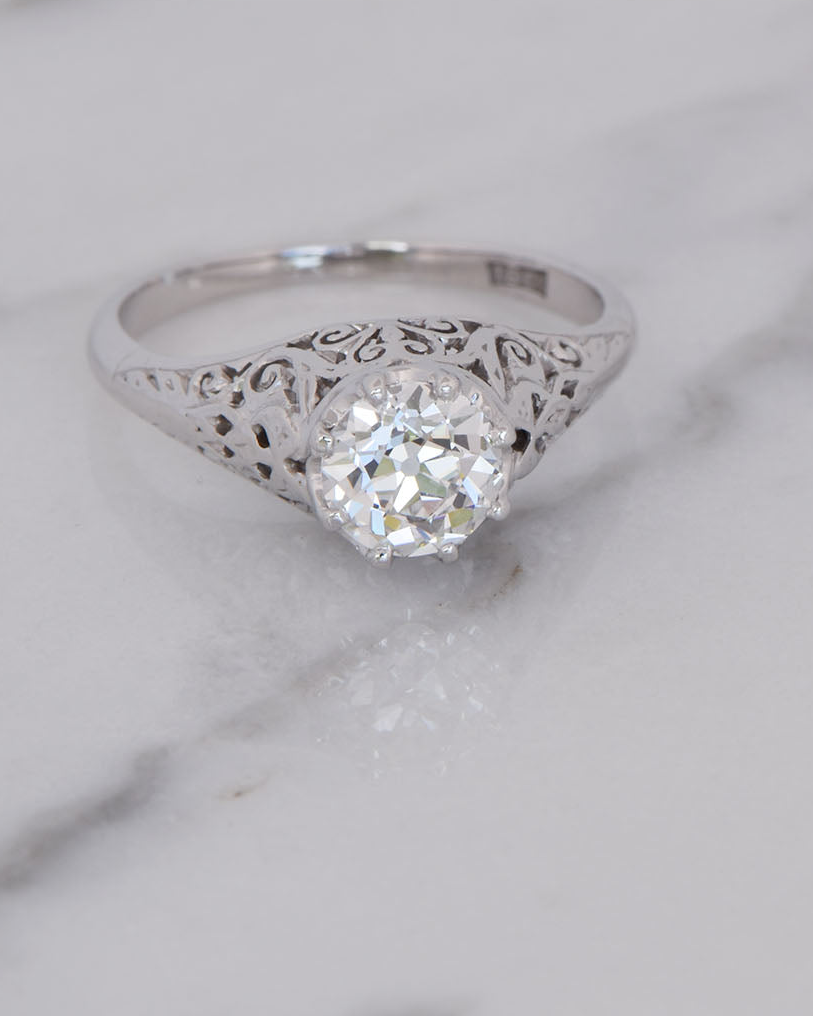


Setting and design guidance
Choosing a setting for a natural diamond
The setting decides how a natural diamond is seen. These are the directions we most often explore with clients, and each one suits a different kind of stone.
- Refined solitaires
- When the diamond itself is the story, a solitaire lets it lead. This works especially well for beautifully cut white diamonds, elegant step cuts and antique stones with strong face-up personality.
- Antique-inspired settings
- Old-cut diamonds feel completely at home in antique-inspired work: fine claws, milgrain, hand-finished detail and settings with a collected feel.
- Three-stone rings
- Three-stone designs suit natural diamonds because they combine symbolism with visual presence. They also let you play with contrast: white with warm side stones, sapphire with diamond accents or a rare centre framed by quieter supporting stones.
- Mixed diamond and sapphire designs
- Natural diamonds pair beautifully with Australian sapphires when you want colour, individuality and a more personal design language.
Book a natural diamond consultation
Compare natural diamonds side by side
Visit us in the studio or start by getting in touch online. We will help you compare natural diamond options side by side, explain what matters and guide you towards a stone that feels right in both beauty and meaning.
What is the difference between a natural diamond and a lab-grown diamond?
A natural diamond formed underground over billions of years and was mined from the Earth. A lab-grown diamond is chemically identical but is created in a controlled industrial environment in weeks. Both are real diamonds. The difference is origin, rarity and what that means to you. Natural diamonds are finite. Lab-grown diamonds are not, and their prices have fallen sharply in recent years. We work with both and will never steer you towards one or the other. We will give you an honest picture of what each means for your piece.
Do your natural diamonds come with a grading report?
Natural diamonds above 0.30ct that we source come with an independent grading report. GIA is the laboratory we use most for natural loose diamonds. Antique and estate diamonds sometimes carry an existing GIA report. Where they do not, we explain why and can arrange independent grading before you buy. We do not sell significant natural diamonds unless we can account for what they are.
How much should I expect to spend on a natural diamond?
It depends on the specification and on market conditions at the time of sourcing. For a round brilliant between 0.70ct and 1.00ct, a quality range that looks beautiful in a finished ring is GIA Excellent cut, G to I colour and VS2 to SI1 clarity. Ask us for current prices in that range. There are excellent options in smaller weights, and above that size the range opens up considerably. Antique and salt and pepper diamonds often give you more stone for the budget. We work across all of these and will always tell you where your money goes furthest for what you want.
What does the process look like from first contact to finished ring?
It starts with a conversation, in person at our Adelaide studio or by phone or video if you are elsewhere in Australia. We talk through what you are drawn to, your budget and what the ring needs to be. Then we source and present a shortlist of stones that match your brief. You confirm the diamond and we move into design. Your ring is designed and hand-finished in our Adelaide studio. Making usually takes six to eight weeks once you approve the design. We keep you informed at every stage.
Can I see the diamond before I commit?
Yes. For Adelaide clients we encourage seeing stones in person before any commitment is made. Seeing diamonds side by side under different lighting, alongside the grading report, is how most people make their best decision. If you are interstate or regional, we can show you stones in real time by video and talk you through exactly what you are seeing. Nothing is locked in until you are ready.
Do you work with antique and old-cut natural diamonds?
Yes, and we enjoy it. Old European cuts and old mine cuts were faceted by hand for candlelight. Their larger facets, higher crowns and open culets give a warmer, more romantic fire than modern precision cuts. An antique diamond has been mined and cut before and is already in circulation, which matters to many of our clients. We source antique diamonds through specialist estate dealers in Australia and overseas and check their condition and authenticity. We only recommend stones we would be proud to set. If you are drawn to vintage looks or want a stone with real history, they are worth exploring.
How do I choose the right balance of cut, colour and clarity?
Cut first, always, because it decides how much life and light the stone has. Clarity in the VS2 to SI1 range is eye-clean for most clients and avoids paying for microscope-level perfection no one will see in a finished ring. Colour is where you have the most room to move: G to I reads as white face up, and if you are setting in yellow or rose gold you can go warmer still without any visible difference. We go through this in detail in a consultation, where a short conversation with the stones in front of you often answers more than hours of reading.
Are your natural diamonds responsibly sourced?
Responsible sourcing matters to us as much as it does to you. Every natural diamond we source complies with the Kimberley Process Certification Scheme as a baseline. Where possible we go further, asking for chain of custody documents and working with suppliers who can speak to the mine or region of origin. When a stone can be traced to a specific country, we tell you. When we do not know, we say so. Antique and recycled natural diamonds are already in circulation, and many clients choose them for that reason.
How long does it take to find a diamond?
It depends on the brief. A modern natural diamond within standard specifications is quicker to find than an unusual one, such as a rare shape, a very specific colour grade, an antique cut or an Argyle stone. If you have a date in mind, tell us early, so there is time to find the right stone without rushing towards a deadline. Making usually takes six to eight weeks once you approve the design.
What if my question is not answered here?
Get in touch and we will answer it properly, so you do not have to guess. We are always happy to talk through the specifics.
Guides and collections
Read further
Loose natural diamondsThe kinds we offer, and how sourcing works
Natural fancy colour diamondsArgyle, champagne and other natural colours
Australian diamondsArgyle and Australian provenance
Salt and pepper diamondsInclusions that make each one different
Antique and vintage diamondsOld mine and old European cuts
Natural or lab-grown?Origin, price and grading reports compared
Lab-grown diamondsWhat they are and what they cost
Diamond conciergeA shortlist found for your brief
The art of facetingHow a cut decides how a stone looks
Australian sapphiresColour for a diamond and sapphire design
Diamonds in AdelaideVisit the studio, or start from anywhere
All diamondsNatural, lab-grown, antique and fancy colour

Visit, or start from anywhere
20 Ebenezer Place, Adelaide
In the East End, or by video from anywhere in Australia.
- Open
- Monday to Saturday
- Phone
- (08) 8359 3113