


Gemstone sourcing, told honestly
Many jewellers say their stones are ethically sourced and leave it there. We would rather show you how gemstone provenance actually works - where it can be proven, where it cannot, and exactly where each of our stones sits on that scale.
Ethical is not a yes or no. It is a spectrum
Around eighty per cent of the world's coloured gemstones, including most sapphire, are dug by artisanal and small-scale miners - roughly forty-five million people working largely by hand, often far from any formal oversight. That is not a flaw to hide. It is how the trade works, and for many communities it is a vital livelihood. But it means a stone's history can be anything from fully documented to almost completely unknown, and roughly a third of mined gemstones pass through some unregulated or illicit step along the way.
So rather than claim everything we sell is flawlessly clean, we place each origin on a scale of how well its journey can actually be traced. The closer to fully traceable, the more confidently we can stand behind it. Where a chain of custody cannot be verified to a standard we are comfortable with, we say so - and in some cases we decline to buy at all.
A documented chain from the specific mine, often with a certificate of origin or a unique stone ID. Provenance can be proven, not just asserted.
We know the country, the deposit and the people we buy from, but not always the individual pit. This is where most good artisanal material honestly sits.
Chains we cannot trace, or sources where buying funds harm. We either avoid these or, in narrow cases, explain exactly why we make an exception.
Stones whose journey can be proven
These are the origins where provenance is documented rather than promised - a certificate of origin, a unique stone or parcel number, or a relationship close enough that we have stood at the source ourselves.

Australia
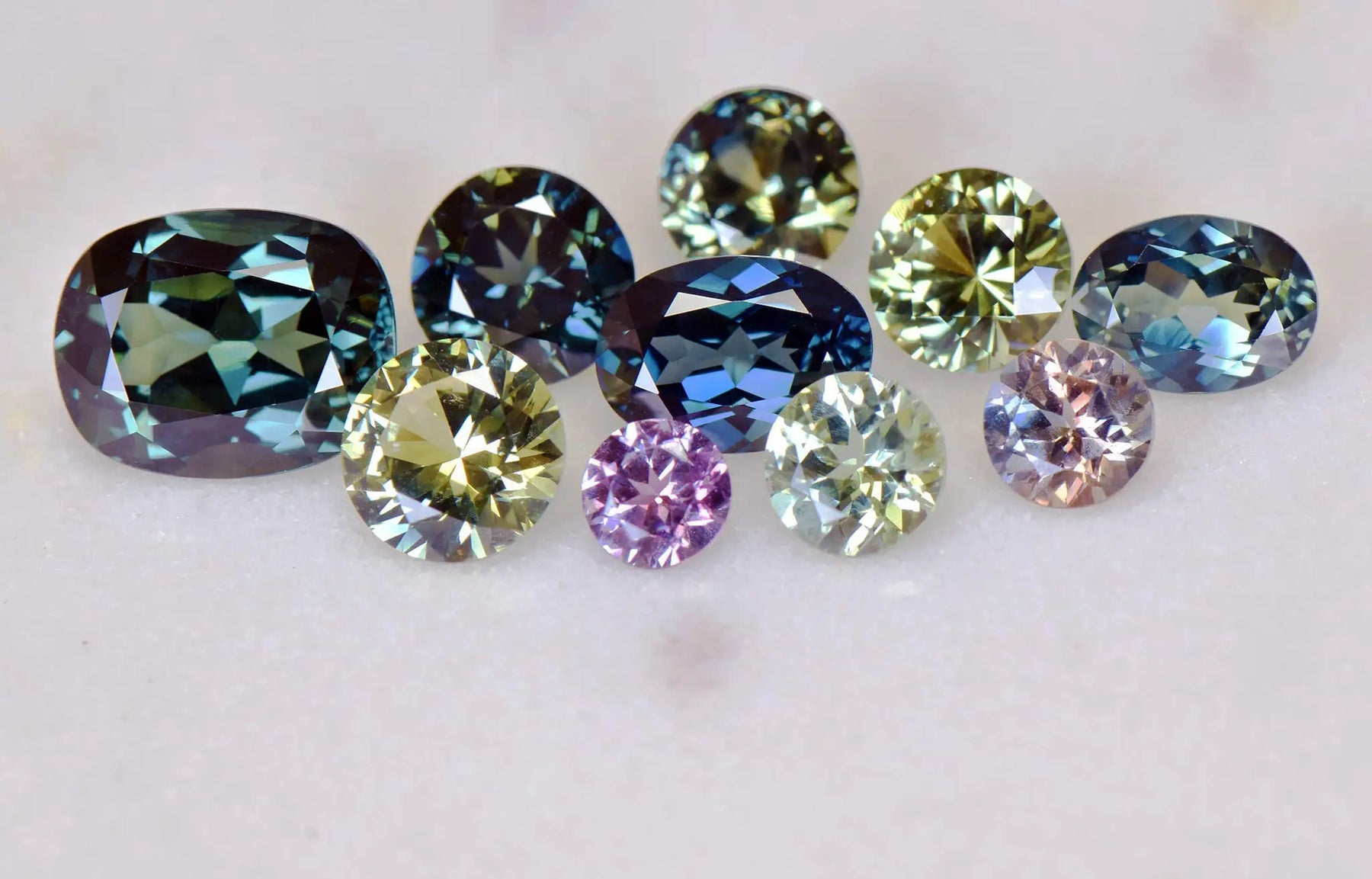
Our home ground, and the easiest origin to stand behind. We buy Queensland and New South Wales sapphires - including the parti and teal stones we are known for - directly from miners and cutters we deal with by name. Australia's mining and labour laws are among the strongest in the world, with mandatory environmental assessment, land rehabilitation and workplace safety standards. For many Australian stones we can tell you the field, sometimes the specific lease.
Greenland
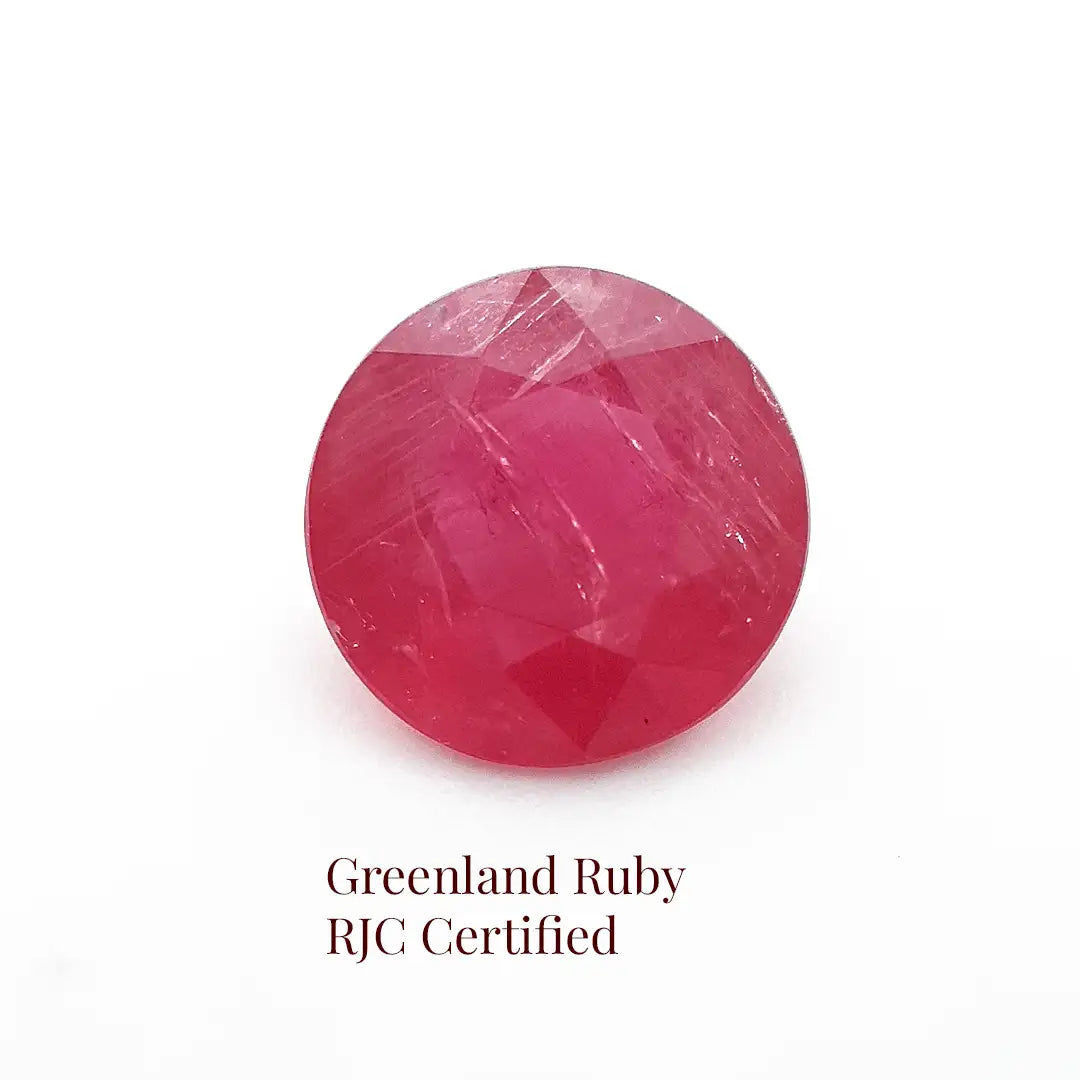
Rubies and pink sapphires through Greenland Ruby's Aappaluttoq mine - one of the most rigorously documented coloured-stone supply chains anywhere. Each parcel is numbered at the mine, tracked through cutting, and sold with a certificate of origin approved by the Government of Greenland. The first coloured-gemstone miner to join the Responsible Jewellery Council. Unfortunately this mine has closed.
United States (Montana)
Montana sapphires are among the most traceable gemstones on earth - buyers can often name the exact creek or deposit, from Rock Creek to the Missouri River to Yogo Gulch. Mining is small-scale and tightly regulated. One honest note: most Montana sapphire is heat-treated to develop colour; only Yogo material is reliably untreated, and the Yogo deposit is largely inactive. We value Montana for its provenance, and we are clear about treatment.
Mozambique
Rubies from the Montepuez deposit in Cabo Delgado, which now supplies roughly half the world's rubies. The mine's operator sells through audited auctions with proceeds repatriated to Mozambique and royalties paid on the full sale value - a genuine step up in transparency for a trade that was long informal. We do not gloss over the complication: Cabo Delgado has an active insurgency, and the operator has faced past litigation over conduct near the concession. We buy where custody is documented and stay alert to the wider context.
Greenland Ruby, mine to market
The Aappaluttoq mine in south-west Greenland, opened in 2017, runs one of the most rigorously documented coloured-stone supply chains in the world. Every parcel of rough is assigned a number the moment it leaves the ground, and that number follows each stone through sorting, cutting and setting.
Each finished stone arrives with a certificate of origin approved by the Government of Greenland. Greenland Ruby was also the first coloured-gemstone miner to join the Responsible Jewellery Council. It is the clearest example we can point to of a stone whose history is proven rather than assumed.
When a chain of custody is this complete, you are not asked to trust a slogan. You can read the paperwork.
Known hands, known region
Most fine coloured stones come from artisanal mining, where a formal mine-to-market rarely exists. Here, traceability means direct relationships: cutters, dealers and small-scale miners we know, in regions we understand. We can tell you the country and usually the deposit, even when we cannot name the individual pit.
Sri Lanka
One of the oldest gem-producing nations, with mining traditions stretching back over two thousand years. Sri Lankan mining is largely artisanal and comparatively well-governed, regulated by the National Gem and Jewellery Authority. We buy through long-standing dealer relationships; we can reliably tell you the country and often the district, though rarely the individual pit.
Brazil
The full spectrum of Brazilian coloured stones, especially tourmaline and the beryls. Brazil's gem sector is enormous and mostly small-scale, with provenance that varies deposit by deposit. We work through cutters and dealers we trust to know where their rough comes from.
Nigeria
Tourmaline and sapphire from a growing West African source. Mining is overwhelmingly artisanal and oversight is limited, so traceability rests on the relationship with the dealer rather than on paperwork. We buy selectively, direct from within the country and are candid that the chain here is shorter on documentation than our Tier-one origins. We only buy cut stones, not rough. This builds skills within Nigeria while maximising the value of the gemstones before they leave the country.
Thailand
While Thailand still has extensive sapphire mines its developed into the cutting and trading heart of the global coloured-stone trade - a great deal of the world's sapphire and ruby passes through Bangkok to be cut. That makes Thai relationships about the people, not the ground. It also means care is required, because stones of many origins, including some we would not knowingly buy, are consolidated here. We treat Thai-sourced material as traceable only as far as the dealer can honestly document it.
India
Chiefly a cutting relationship rather than a mining one: natural diamond cutting, including salt-and-pepper stones, and lab-grown diamond growth and cutting. India is the world's dominant cutting centre, and our focus here is on cutters whose practices we can verify.
Madagascar
Madagascar produces an extraordinary range of stones and, by some estimates, a large share of the world's sapphire. The challenge is candour itself: mining is overwhelmingly informal, with around half a million people involved and little formal record-keeping. We buy Madagascan material only through dealers who can credibly account for it, and we are clear that this is a partly-traceable origin, not a documented one.
Where we draw the line
Some sources we cannot trace to a standard we are comfortable with, and some we avoid because buying directly funds harm. We would rather name them and explain our position than quietly let unverified stones through and call everything ethical.
Myanmar (Burma)
Myanmar produces some of the most coveted rubies in the world, and we do not buy them. The state-owned Myanma Gems Enterprise takes a share of gem revenue and is under international sanction; campaigners including Global Witness have said plainly that there is no such thing as an ethically sourced Burmese ruby while the military profits from the trade. The supply chain is also deliberately opaque - much Burmese material is cut in Thailand and re-labelled - so we will not represent any stone as Burmese-clean. Major houses including Tiffany and Cartier have taken the same position.
Afghanistan
The hardest case on this page, and the one exception we make in this tier. We have bought a number of small parcels of tourmaline from artisanal miners starting in 2023. Custody cannot be documented to a Tier-one standard, so by our own scale this is opaque. Our reasoning for buying anyway is that small-scale gem mining is a long-standing local livelihood, and continuing to buy from artisanal miners gives families a way to earn outside the bounds of war - whereas refusing leaves them with fewer options, not more. We do not pretend this is uncomplicated. It is the position we hold, and we are open to discussing it.
What traceability can and cannot promise
Traceability is a measure of documentation, not a guarantee of virtue. A stone can be fully traceable and still come from a mine with real social or environmental costs, and a partly traceable artisanal stone can support a family doing careful, low-impact work. We treat provenance as the start of the conversation, not the end of it.
We are also a small studio. We cannot audit the global gemstone trade, and we will not pretend a certificate settles every question. What we can do is buy from people we know, ask hard questions when documentation runs out, decline what we cannot defend, and tell you honestly where each stone sits.
If that sounds less tidy than the usual promise that everything is ethically sourced, that is the point. The tidy version is rarely true. We would rather give you the real picture and let you choose with open eyes.
Have a question about a particular stone or origin? Ask us. We would rather have the conversation than dodge it.
Start the conversation