


Caring for your jewellery – Utopian Creations
Made to be worn.
Meant to last.
Fine jewellery is built to be worn every day, and handed down long after that. But a lifetime of wear takes a little looking after. This is where we bring it together: how to care for your pieces at home, when to bring them to us, and the services that keep them safe for the long run.
Caring for it at home
A few small habits go a long way.
Fine jewellery is tougher than it looks, but the way you wear, clean and store it decides how well it ages. None of this is fussy. It is just worth knowing.
Take it off for the rough stuff.
Slip your rings off before cleaning, gardening, the gym or lifting, anything with knocks or harsh chemicals. Keep jewellery clear of chlorine in pools and spas, and of perfume, hairspray and household cleaners. A simple rule: jewellery on last when you are getting ready, off first at the end of the day.
Warm water, mild soap, a soft brush.
For most pieces that is all you need: a gentle scrub behind the stone where oils and hand cream collect, then pat dry with a soft, lint-free cloth. Do it over a bowl, never an open drain: if a claw has worn, you do not want a loose stone vanishing down the sink. Skip the paper towel. It can leave fine scratches on softer metals.
Give each piece its own space.
Stones come in different hardnesses, and a loose diamond will happily scratch almost anything it shares a box with. Keep pieces in separate soft pouches or a lined compartment, do not let chains tangle, and choose a dry spot away from heat.
When in doubt, don’t.
Home ultrasonic cleaners are widely sold, but they are not safe for every piece: soft, porous, organic or treated stones, and older worn settings, can be damaged or shaken loose. If you are not certain what you have, leave it to us rather than risk it.
Know your stones
Not every stone likes the same treatment.
Sapphires and diamonds are among the hardest stones there are, so our Australian sapphires and diamond pieces take a careful warm-water clean in their stride, along with solid gold and platinum.
Even so, check the setting has not loosened afterward, and do not scrub hard.
Emeralds are usually oiled and can be brittle. Opals are soft and porous. Pearls are organic and delicate. None of these should ever meet an ultrasonic or steam cleaner, or harsh chemicals. And turquoise, tanzanite, moonstone and a few others are best kept to a careful wipe.
If in doubt, bring it in and we will clean it properly, by hand.
The one thing worth doing
Bring it in once a year for a check.
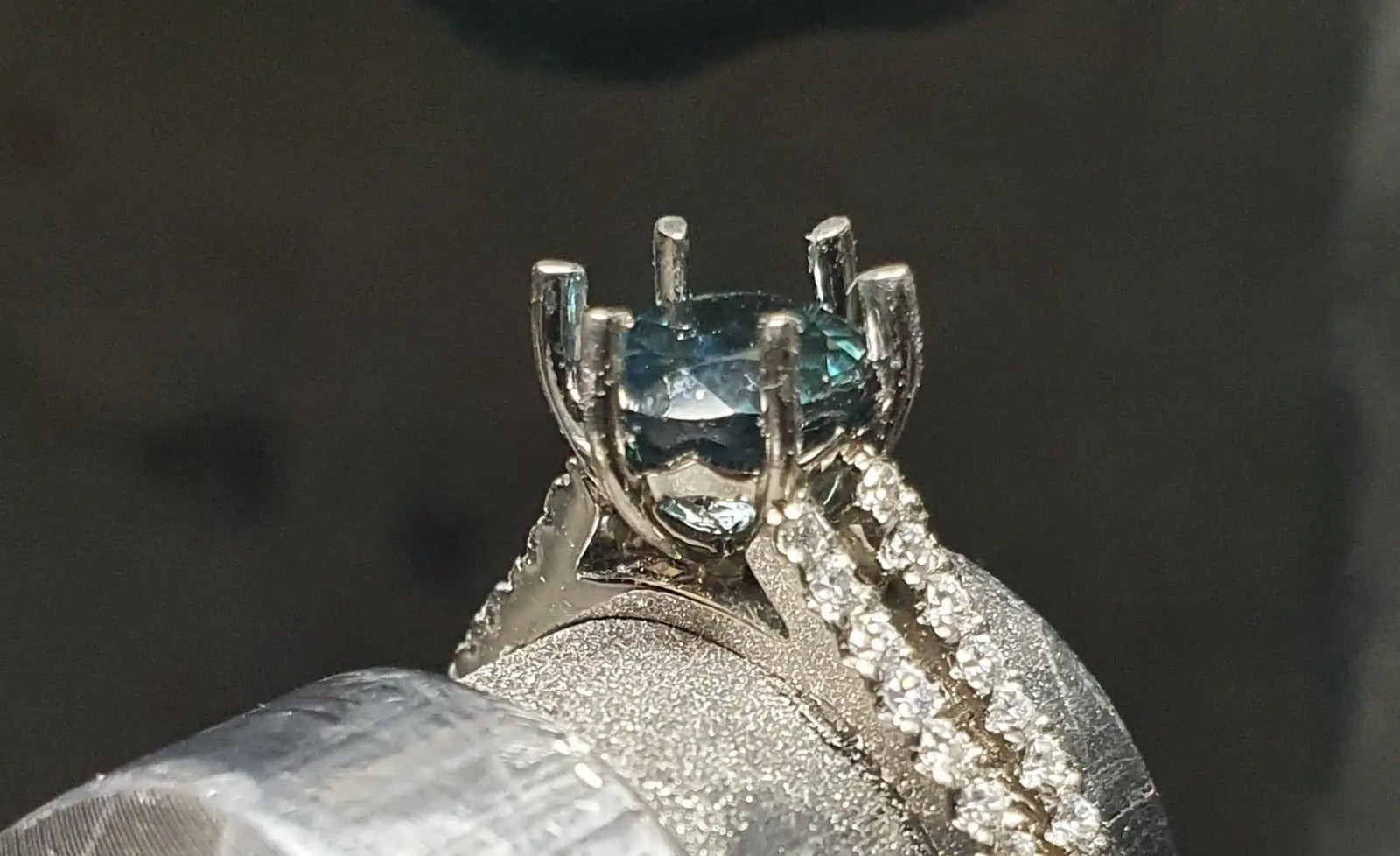
The single best thing you can do for a piece you wear every day is have us look it over once a year. We check the claws, settings and clasps under magnification (the places wear hides) and catch a worn claw or a loosening stone before it becomes a lost one. It is a quick job, and it has saved a lot of stones over the years. While it is with us, we will give it a proper clean.
Losing a stone is heartbreaking, and nearly always avoidable. A yearly check is how you avoid it.
When to bring it to us
Repairs, restoration and valuations.
Some things are a job for the workshop rather than the kitchen sink. Here is what we look after, and where to read more.
Repairs
From a resize or a new clasp to re-tipping worn claws and rebuilding a tired setting, we repair jewellery in our Adelaide workshop: our own pieces, and in most cases jewellery made elsewhere too. Some pieces we will assess first and be honest if we are not the right ones to work on it.
Repairs →Antique restoration
Restoring antique and heirloom jewellery is a craft that is fading, and one our team knows well. We bring worn and damaged older pieces back to life while keeping what makes them special, using techniques suited to how they were originally made.
Antique restoration →Valuations
Independent valuations for insurance, carried out at arm’s length by a qualified valuer with no stake in the piece. For antique work we will often suggest a valuation before and after, so your cover reflects the piece as it is now.
Valuations →Valuations & insurance
Keeping your pieces properly covered.
A valuation is what stands between a lost or stolen piece and being properly compensated for it.
A few things worth knowing. Insurance is based on the retail replacement value (what it would cost to make or buy the piece again today, not what you paid for it or what you would get selling it on). Prices for gold and stones move, so a valuation dates: most valuers suggest updating it every two to three years, so you are never left under-insured. And it is worth checking your home and contents policy actually covers jewellery to the value you need: many have a low per-item limit, and cover away from home is not a given.
Keep your valuation certificate and a few clear photos somewhere safe, separate from the jewellery itself. If a piece is ever lost or stolen, that paperwork is what makes a claim straightforward.
We keep our valuations independent on purpose: a value means more when it comes from a qualified valuer with no interest in selling you anything.
And everything we make is backed for life.
Every piece we handcraft comes with our lifetime manufacturing warranty. If something goes wrong that should not have, we will put it right. Care and fair wear are yours to look after; the making is ours to stand behind.
The first step
Bring it in.
Whether it needs a clean, a check, a repair or a fresh valuation, or you are simply not sure, bring your piece in and we will take a look. Honest advice, no pressure.